
Silver Lining Therapist, LLC — Bergen County, NJ
Therapy
for Teens
For the teenager who looks totally fine — and is carrying a lot more than anyone knows.
Book a Free Consultation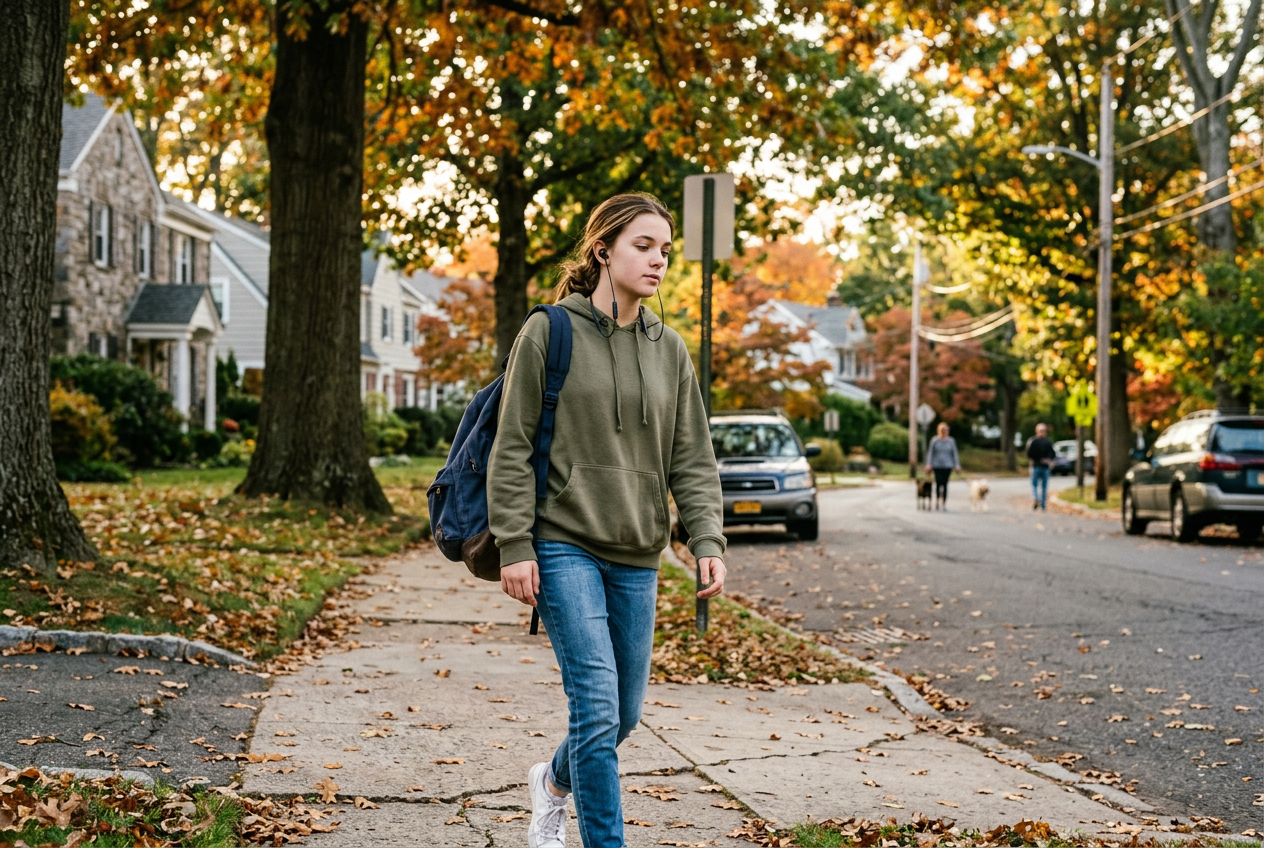
Glowing Reviews
"I had the privilege of working with Lindsay for about two years, and I couldn't be more grateful for her support. She is professional, attentive, and has a genuine interest in her clients' well-being. She's a great listener and helped me tremendously."
Silver Lining Therapist Client
"Lindsay is a great therapist to work with. Sessions are easy to set up and were very helpful. I would highly recommend her!"
Silver Lining Therapist Client
Does this sound familiar
They seem fine.
That's the part that worries you.
The hard stuff teens carry today doesn't always look hard. It looks like distraction, irritability, pulling away — or just "being a teenager."
Everything on their phone feels like a comparison they're losing.
They scroll and set it down, then pick it up again ten minutes later. The highlight reel never stops — and neither does the quiet feeling that they're falling behind.
Friend group drama that seems small — but isn't.
They don't always tell you the details, but you can see it in how they come home. The shifting alliances, the group chats, the wondering where they actually stand.
They say yes when they mean no. Every time.
They'd rather stay uncomfortable than disappoint someone. They don't know how to hold a boundary — or that it's okay to have one in the first place.
The worry starts before anything has even happened.
Tests, tryouts, conversations they haven't had yet. They're already managing the outcome in their head — and it's exhausting them.
What's actually happening
Being a teenager
right now is genuinely hard.
Not harder than you had it — differently hard. The pressure is constant and it doesn't clock out. Social media, academic expectations, identity, belonging — it's all happening at once, and most of it is invisible to adults.
When teens are anxious, it often doesn't look like anxiety. It looks like avoidance. It looks like irritability. It looks like a kid who is totally capable — and who is quietly struggling in a way they can't fully name.
The longer it goes without being addressed, the more it becomes the baseline. What started as situational stress can quietly become the way they move through the world.
How I can help
I know the world
your teen is in.
Working with teens takes a specific kind of fluency — not just clinical training, but genuine familiarity with their world. I'm a Certified School Social Worker. I understand how schools work, what the social dynamics actually look like, and what it feels like to be a teenager navigating all of it right now.
In our sessions, I meet teens where they are. We work at their pace, on what's actually bothering them — not just what looks like the problem from the outside. I help them build tools they'll actually use: ways to manage the worry, communicate what they need, and trust themselves more.
This is practical, grounded work. And it's also a space where your teen gets to be honest with someone who isn't going to panic, judge, or report back.
Book a Free Consultation

Your guide
I'm Lindsay Goldstein-Hawkes.
I've spent my career at the intersection of school and therapy — which means I genuinely understand the world teenagers are moving through right now.
As a Certified School Social Worker and LCSW in private practice, I've worked with teens who are struggling academically, socially, and emotionally — and I've learned that what shows up in one place usually traces back to something happening in another. Anxiety in the classroom. Avoidance at home. Friendship tension that bleeds into everything.
The teens I work with aren't broken. They're bright, perceptive kids who are carrying more than they've been given tools for. That's exactly what therapy is for.
My job is to be someone they can actually talk to — and to help them build the kind of inner footing that stays with them long after our sessions end.
Certified Mindfulness Informed Professional (CMIP)
Certified Clinical Supervisor
Certified School Social Worker
Licensed in New Jersey • Cresskill, NJ
What sets this practice apart
A space that actually
belongs to your teen.
Therapy only works when a teenager trusts the room. Here's how I build that.
They drive. I navigate.
I don't come in with an agenda. Teens shut down when they feel managed — so I start by listening. We work on what matters to them, in a way that feels like a conversation, not an intervention.
Confidential. Genuinely.
Your teen needs to know that what they say here stays here — with the appropriate legal limits. That privacy is what makes honesty possible. I'll always tell you what I can and can't share, and why.
Parents stay in the loop — without breaking trust.
You're not left in the dark. We figure out together what communication works for your family. Most parents find they get more from their teen at home once therapy starts, because they've finally found a place to put it all down.
Before you begin
What getting started
actually looks like.
Whether you're a parent looking into options or a teen who's been thinking about this for a while — here's how the process works.
We start with a free call — usually with a parent.
Before anything else, I want to understand what's going on and answer your questions. There's no intake paperwork before this conversation. It's just a chance to see if this feels like the right fit.
The first few sessions are about building trust.
I don't dive into the hard stuff before we've built some safety. The early sessions are for your teen to get used to the space, understand how this works, and start to feel like they have some ownership over it.
The real work starts to show outside the sessions.
The goal isn't a kid who is great in therapy and struggling everywhere else. We're building skills and self-awareness that transfer — at school, at home, with friends. That's when you'll know it's working.
Getting started
Three simple steps.
The hardest part is making the first call. Everything after that is easier than you think.
Reach Out
Schedule a free 15-minute call. We'll talk through what's going on and whether this is a good fit.
Start Showing Up
Your teen gets a space that belongs to them — to be honest, to figure things out, to breathe.
Watch Them Settle
Less reactivity. More self-trust. The kid you know — with better footing under them.
Questions
Things parents and teens
want to know first.
If you don't see your question here, ask it on the call.
Do parents sit in on sessions?
Generally, no — and that's intentional. Teens open up differently when they know the conversation is theirs. I do occasional check-ins with parents, and we'll figure out a communication structure that works for your family. But the sessions themselves are your teen's space.
What if my teen doesn't want to come?
That's really common, and it doesn't mean therapy won't work. Some resistance is normal — especially for teens who don't want to feel like something is "wrong" with them. I'd still encourage you to reach out. Sometimes an honest conversation with them about what this actually is (not a punishment, not a diagnosis) is all it takes to get them to give it a try.
Is what my teen says confidential?
Yes, with standard legal exceptions — meaning I'll break confidentiality if your teen is in danger of harming themselves or someone else, or if there's abuse to report. Outside of those situations, what your teen shares in sessions stays in sessions. I'm transparent with both parents and teens about exactly where those lines are.
How do I know if my teen actually needs therapy?
If you've been wondering, that's usually enough of a reason to at least have a conversation. Therapy isn't reserved for crisis — it's useful any time a teenager is struggling and doesn't have the tools to work through it on their own. A free consultation costs nothing and gives you a much clearer picture than worrying from the outside.
Do you take insurance?
I'm a private-pay practice. I provide a monthly superbill that you can submit to your insurance for possible out-of-network reimbursement — many families receive partial coverage this way. It's worth a quick call to your plan to find out what you're eligible for.
How long does it take to see a difference?
Every teen is different. Some families notice changes within a few weeks — less reactivity, more willingness to talk, better sleep. Deeper patterns take longer. I'll always be honest with you and your teen about where things are and what I'm seeing as we go.
They don't have to
figure it out alone.
If something on this page felt familiar, that recognition is worth following. A 15-minute call is all it takes to find out if this is the right next step.
Book a Free ConsultationFree 15-minute consultation • No commitment required
145 County Rd, Cresskill, NJ 07626